
I am going to jump ahead of myself as I write this narrative, since, in real time, I haven’t finished yesterday’s entry. The reason? This morning at breakfast, I met five of my fellow travelers. Sitting at a table that provided a commanding view of the comings and goings of fellow diners, I noticed a few individuals that were: 1) definitely Americans; 2) were engaged in the introductory phase of an acquaintanceship; and 3) seemed to have that special aura that distinguishes a Janeite from a Brontëan or a Dickensian.
After finishing my curated “Full English,” I stopped at each of their tables to introduce myself and, having confirmed that they were “one of us”, we exchanged tales of our first day in Windsor. Another auspicious start–although I’ve already forgotten most of their names.
As the weather looked to be a mix of raining-and-not, I grabbed my slicker and headed for the Long Walk, the gates to which happened to be just beyond the Two Brewers pub where I downed a pint yesterday afternoon.
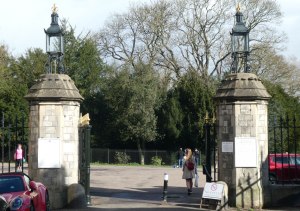
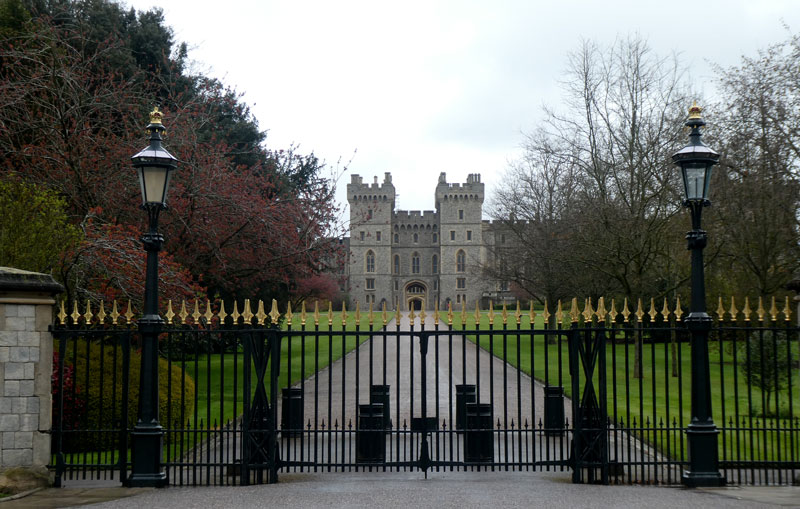
Walking through the portals onto the royal grounds, one is greeted by a well-situated view of the castle’s main entry on the left, as seen through the imposing iron gates, and, on the right, the undulating but arrow-straight length of the Long Walk as it extends to infinity. (Not really. But it may as well have!)
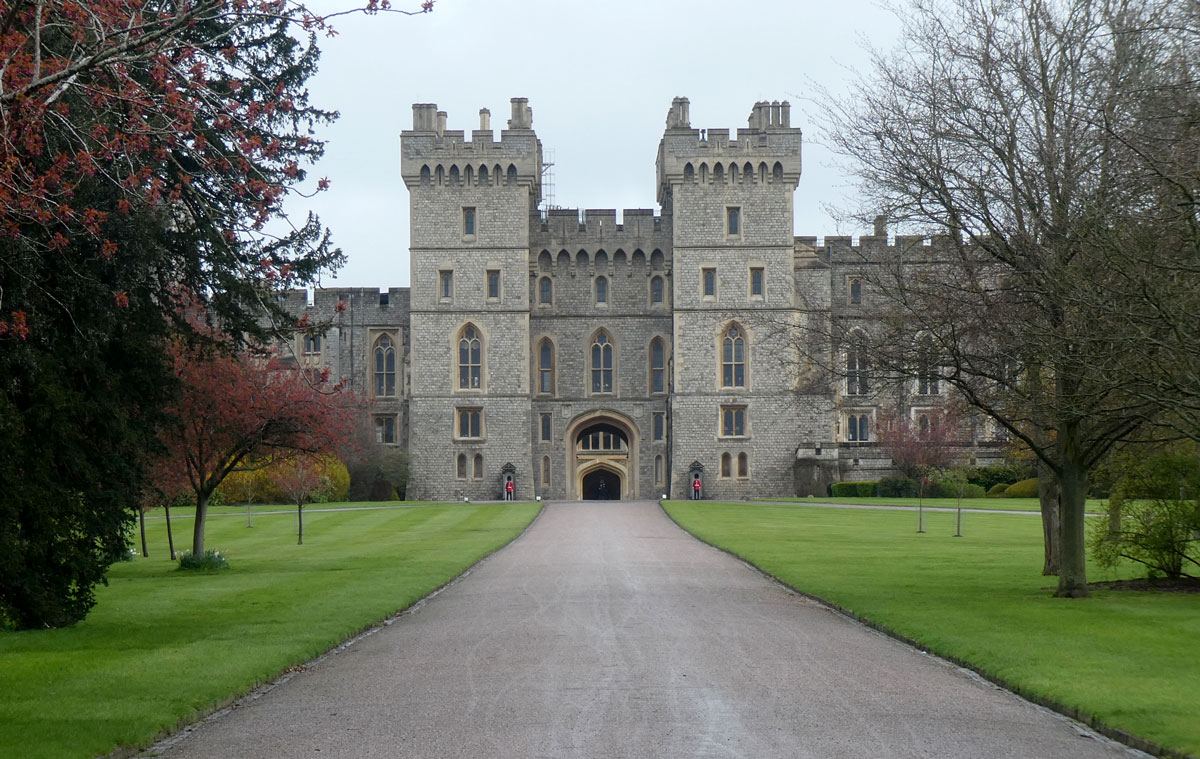
Of course, none of this would mean as much if it weren’t for the recent passing of her Majesty and the televised funeral procession that slowly made its way down the Walk to her final resting place in St. George’s Chapel.
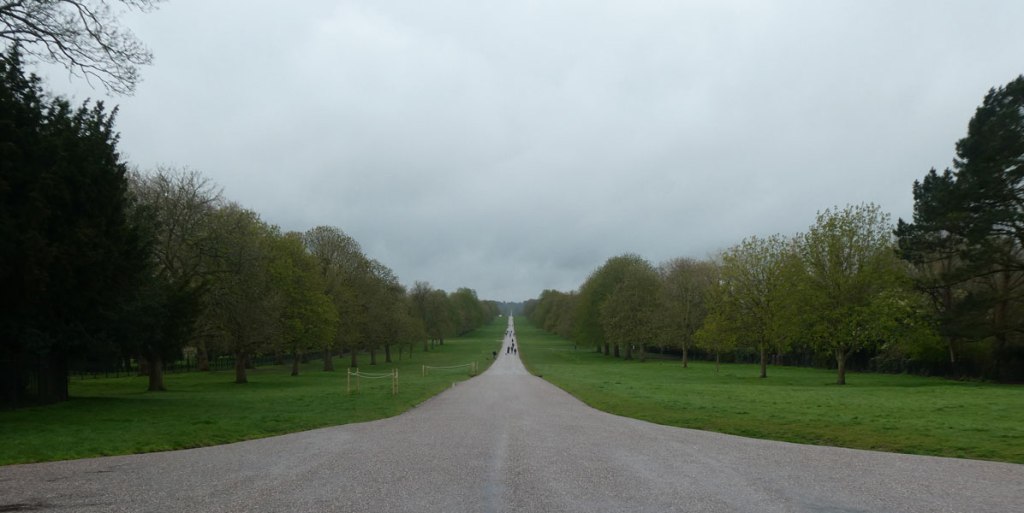
So, I started to walk the Long Walk. Enjoying the playful antics of fellow strollers’ dogs, I considered making the full trip out to the walk’s end and back again, all the while eyeing the distant specks of other strollers partaking in the peace and tranquility of such a simple, well-manicured (and very long) feature. Then the clouds opened up. And, protected though I was, the mood was dampened (!) and I chose to return from whence I came to regroup.
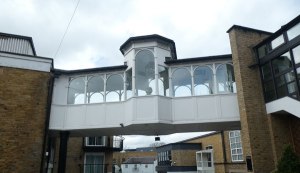
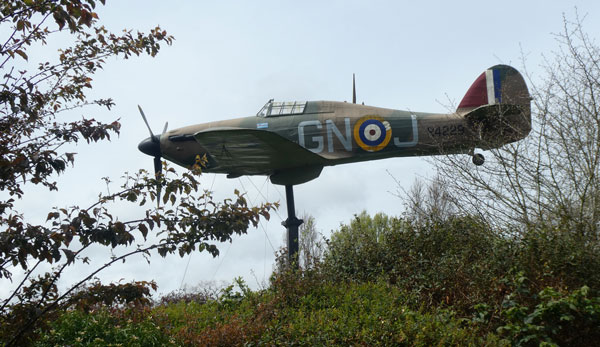
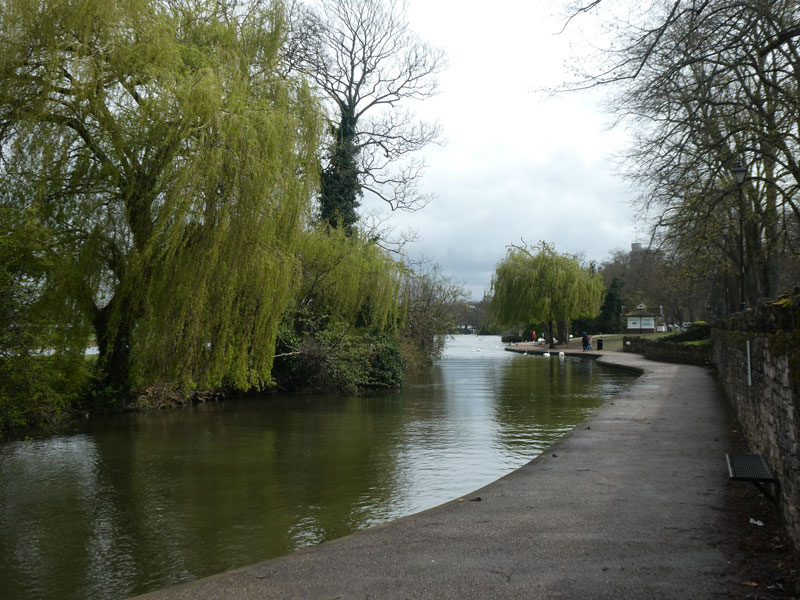
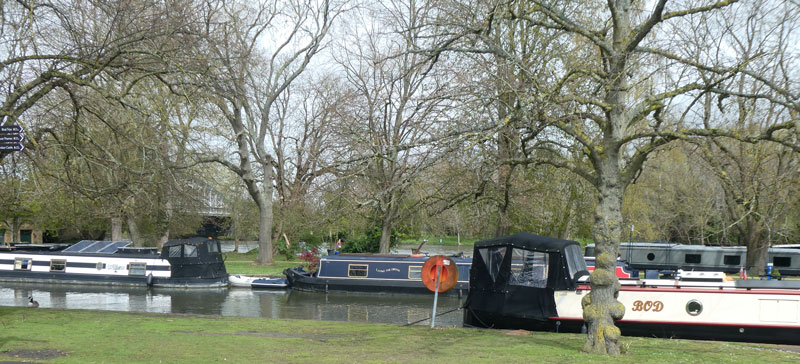
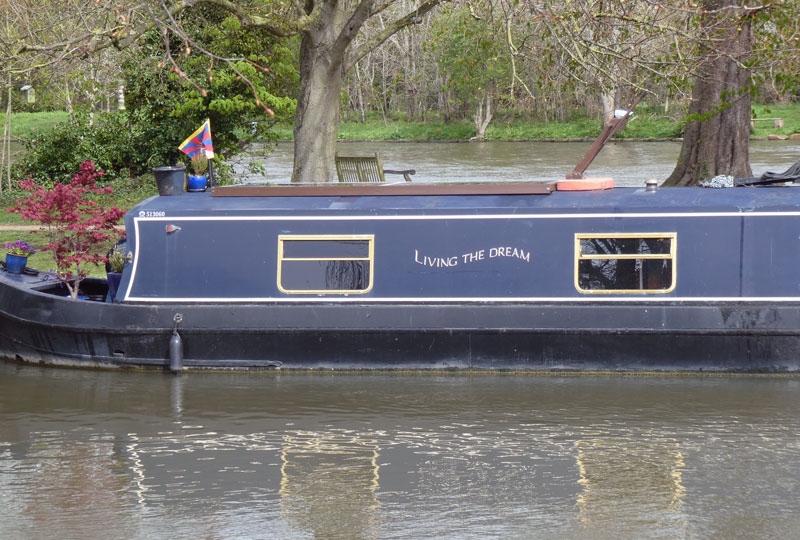
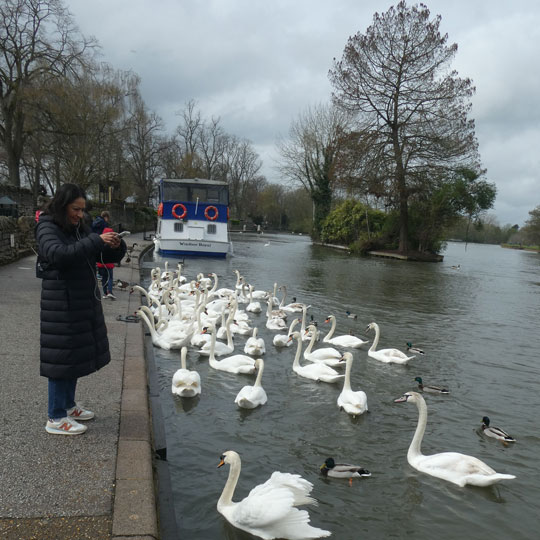
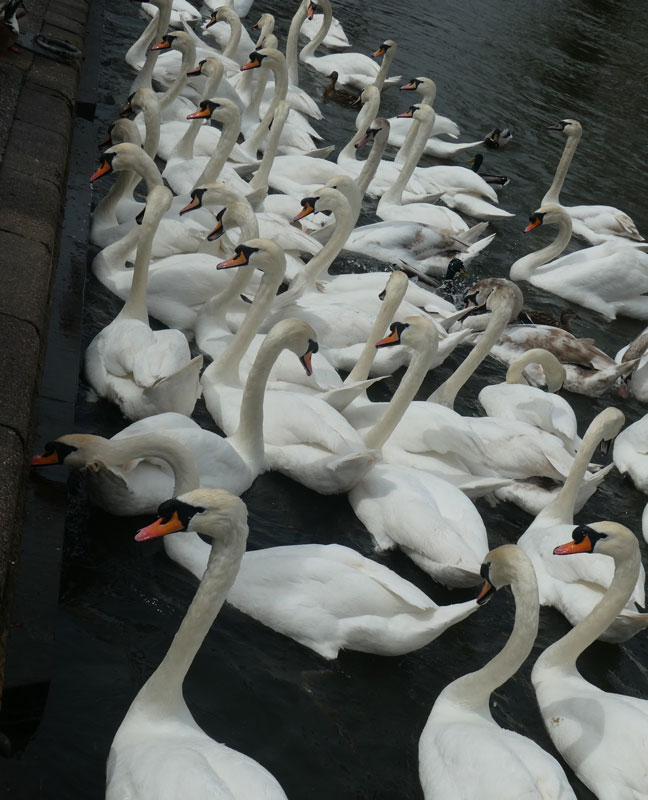
Dry, refreshed and ready anew, I set out once more for the Thames to seek the last of the Windsor sites from my Must-See list: a memorial to Sir Sydney Camm, a former resident of Windsor and the designer of the Hawker Hurricane fighter used to win the Battle of Britain. In addition to locating the mounted aircraft, I found a cluster of houseboats “living the dream” and a bevy of swans battling for tossed feed from the shore. (They can be really mean…especially to each other!) With more time to kill and no particular agenda, I meandered back to the hotel through previously unexplored side streets.
Windsor Castle
As the clock ticked towards 3:00 PM, all the Janeites began to gather in the hotel lobby for our first excursion of the tour: visiting Windsor Castle. I had the pleasure of meeting the “other one” (read: male) in our little group, Parker from Kansas City, along with his wife Becki, both of whom were among the handful who had arrived this morning–only to find their rooms were not yet available.
With tickets in hand, we ventured across the road, through security and into the hallowed grounds of the oldest occupied castle in Europe.
(NOTE: Photography within the castle walls is limited. If it’s outside, it can be photographed; if it’s inside any building, it’s verboten! Or, as someone put it: “Look up. If you see the sky, you can photograph it. If there’s a ceiling, you cannot.”)
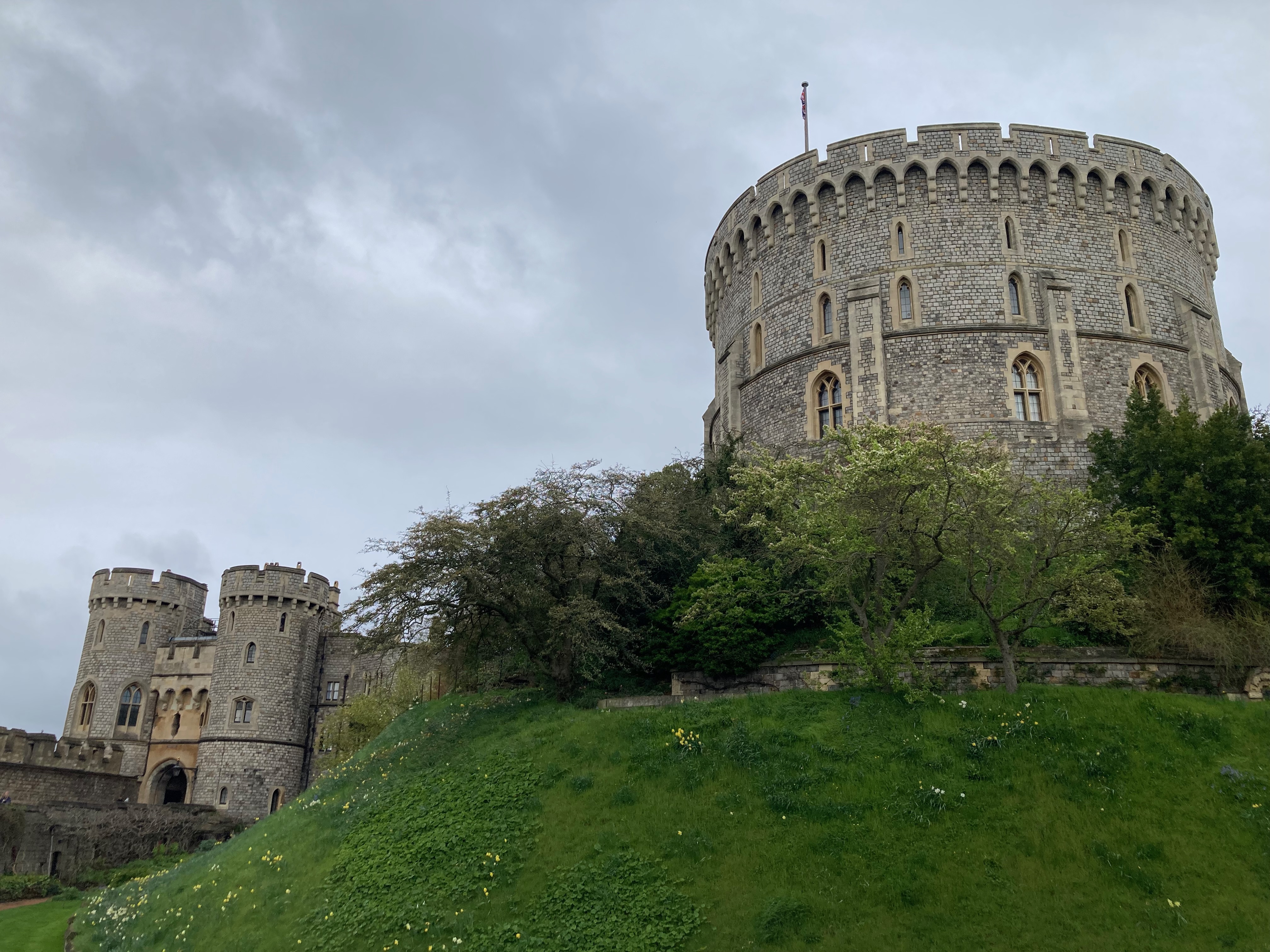
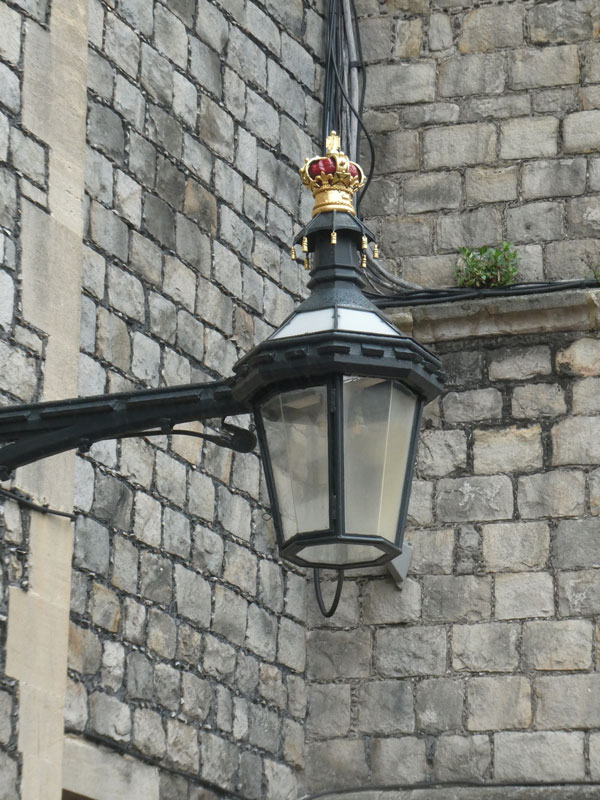
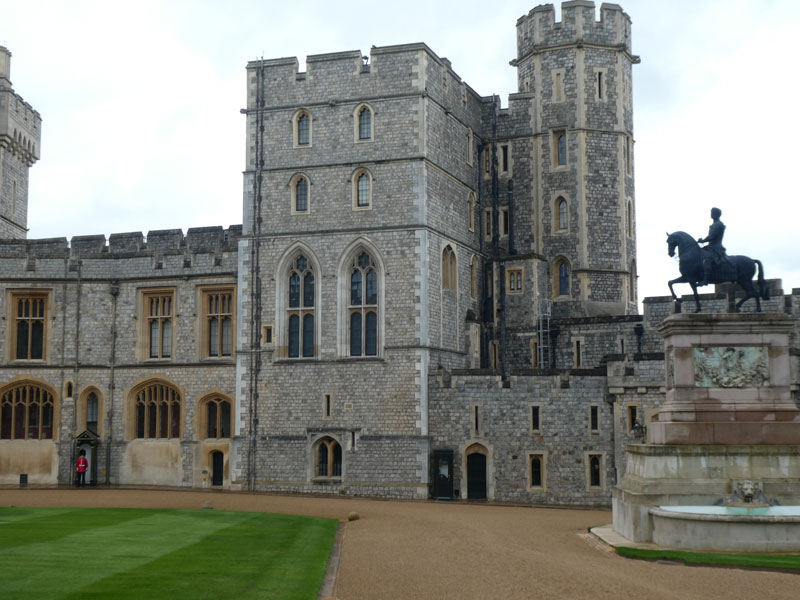
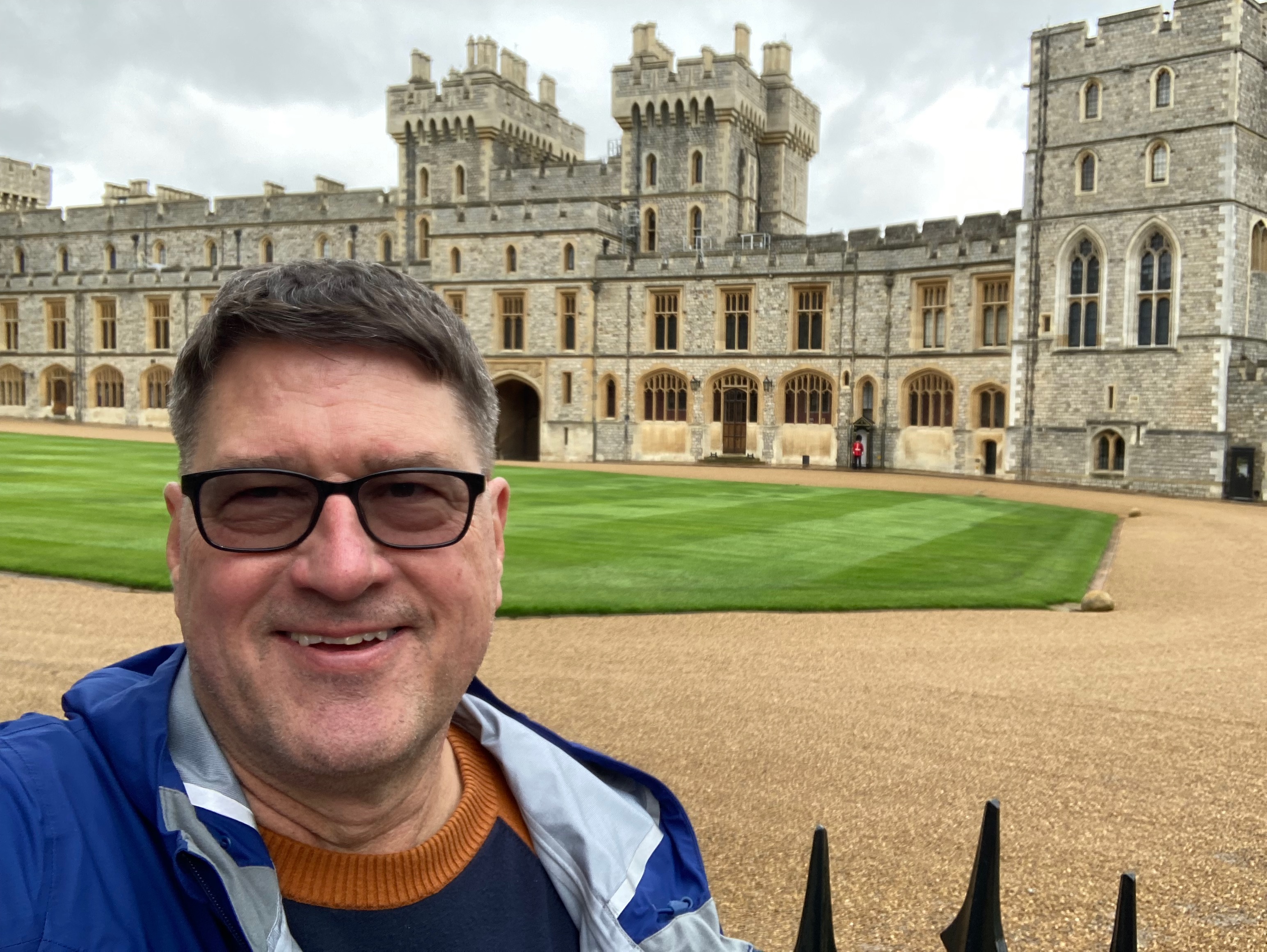
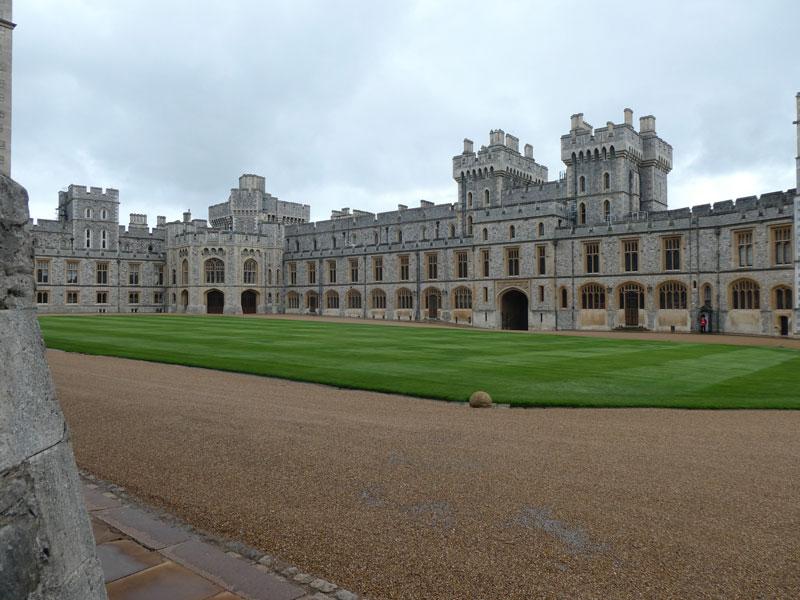
Our first stop was St. George’s Chapel, best known in the States as the place royals go to marry or bury. The route to it was somewhat circuitous as it paralleled the former moat–which has been exquisitely landscaped.
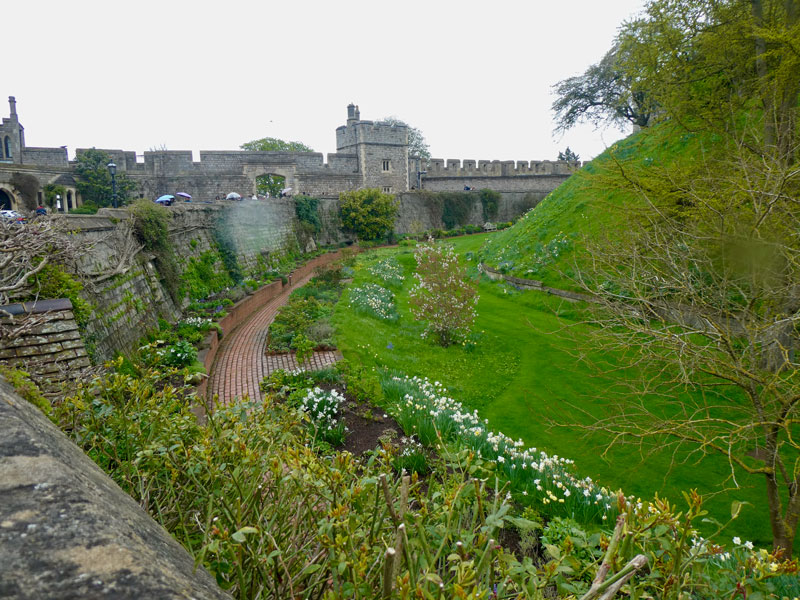
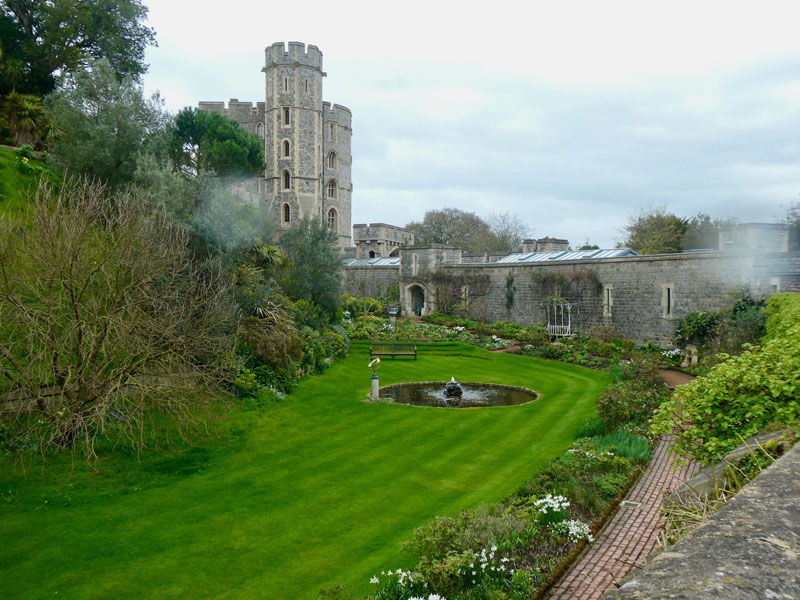
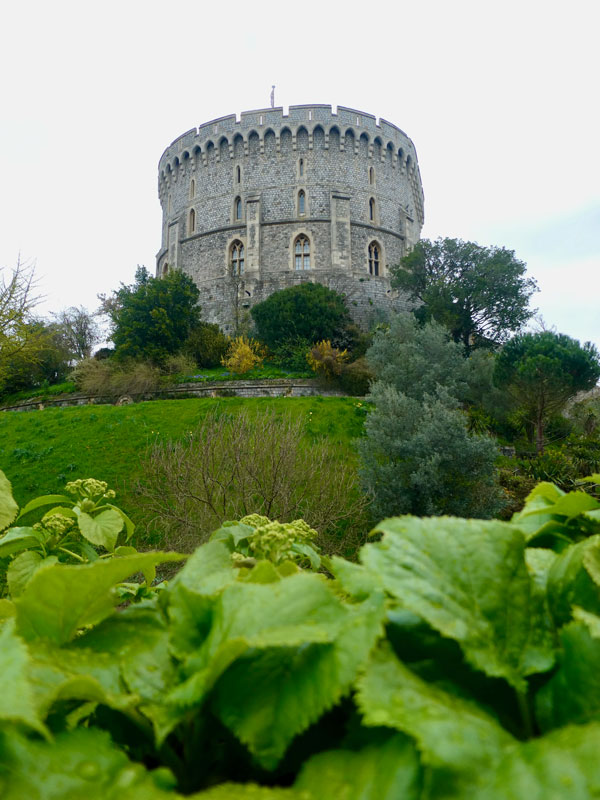
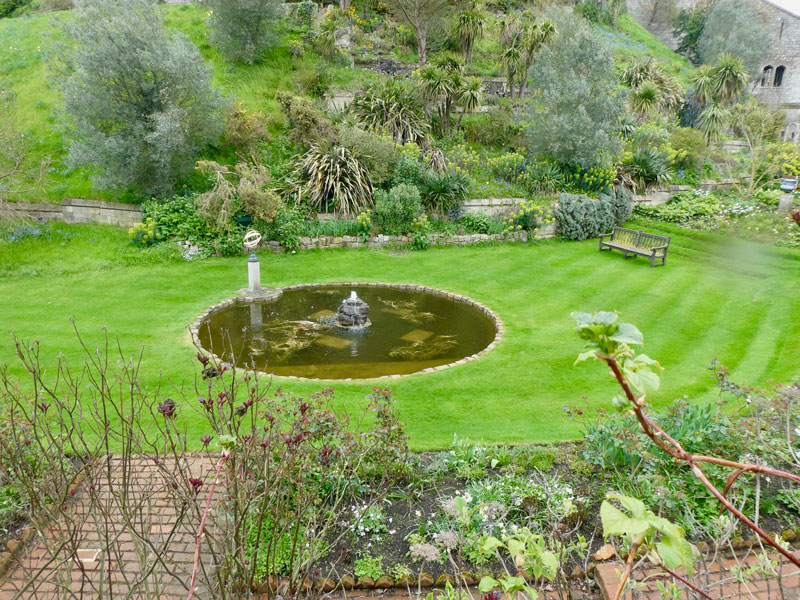
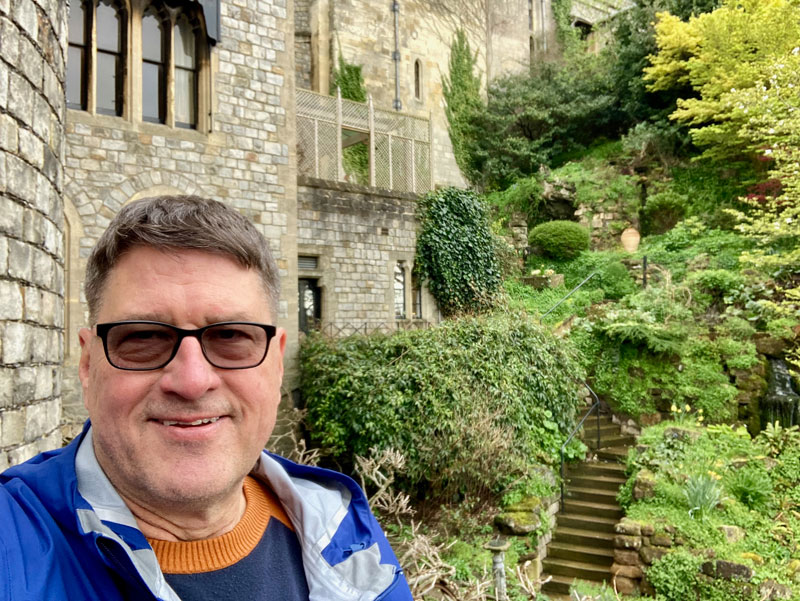
However, we were still on a mission to get into St. George’s Chapel quickly–it closes at 4 PM–so our group hustled through the rain and joined the teeming masses gawking their way through the building.
Since no photography is permitted in the Chapel, here I am, outside of St. George’s with a background of buttresses.

The chapel was started in 1509 and took 50 years to complete. By my calculations, what began as a Catholic house of worship was completed as an Anglican one, religiously.
The interior style of architecture is gorgeous and is most dramatically exhibited in the soaring columns designed in perpendicular Gothic style.
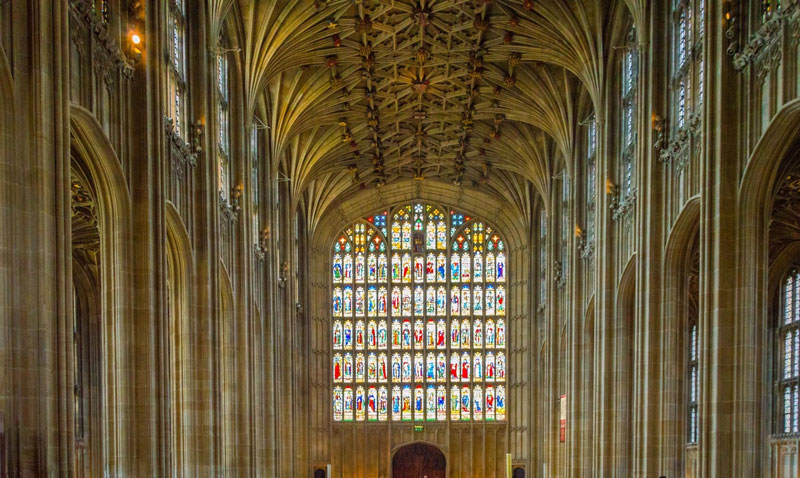
And the inner “choir” of the chapel is festooned with the standards and battle accoutrements of all living Knights of the Garter which almost upstages the very architecture that supports it.
There are many tombs within the chapel but none were given more deference and respect than that of the recently deceased Queen Elizabeth II. She is buried in a gated vault a few steps below the chapel floor level along with Prince Phillip, her parents, George VI and Mary the Queen Mother as well as her sis, Princess Margaret. We were instructed to keep moving, albeit slowly, past the iron gate as we paid our respects. And if someone paused for a brief moment, there was an older woman standing guard who hustled them along with a kind but firm reprimand!
The State Apartments
Having been channeled through and out of the Chapel, I headed uphill to visit the State Apartments. By skipping the queue for Queen Mary’s Dollhouse, I was given immediate access to the public rooms.
My take-aways:
- Lots of military hardware arranged in elaborate patterns. So many swords and pistols, rifles and sabres, épées and epaulets, et cetera and so forth. Just. So. So. Many.
- Glass encased collections of artifacts and gifts from all over the Empire and the rest of the World, usually grouped by region. (Or so it seemed. We did not have the guided tour headphones for explanations, a constant regret)
- There were portraits everywhere filling all available space on the walls. Some were labelled with the artist’s name and the subject–but many remained anonymous.
- And, in retrospect, I recall very few “landscapes” or “still lifes”–just a preponderance of be-wigged or uniformed men.
- The gold brilliance of King George IV’s Crimson Drawing Room–he put the “Regent” in the Regency Period– in contrast to the darker woodwork and sobering hues of most other royals’ decorating style.
- Wondering how even a King or Queen could remain comfortable being scrutinized by three walls of dead-eyed portraits staring down while you were sleeping, dressing, eating, etc. [Shudder]
- Finally, one of my favorite small finds was a very basic but highly-functional little item that was so-Windsor-y. Located on the sill of every window that had a shade was a small cloth holder–imagine an opened-top soup can made of fabric rather than tin–into which the dangling pull cord of the window’s shade was coiled and concealed. So neat. So British.
The evening ended with a dinner here in the hotel. Split among three tables, we began to coalesce as a group, learning names, home towns, our JASNA origin stories and more. I did mistakenly hijack another’s tea order in error. Intended for Penelope, a delightful and very gracious woman (and our sole Canadian traveler), I summarily apologized and replaced her usurped hot beverage. There were no other mishaps I was aware of as many were still in the throes of jet lag and just wanted to crawl off to sleep.
12,098S/5.7M
 Dave In Austenland